
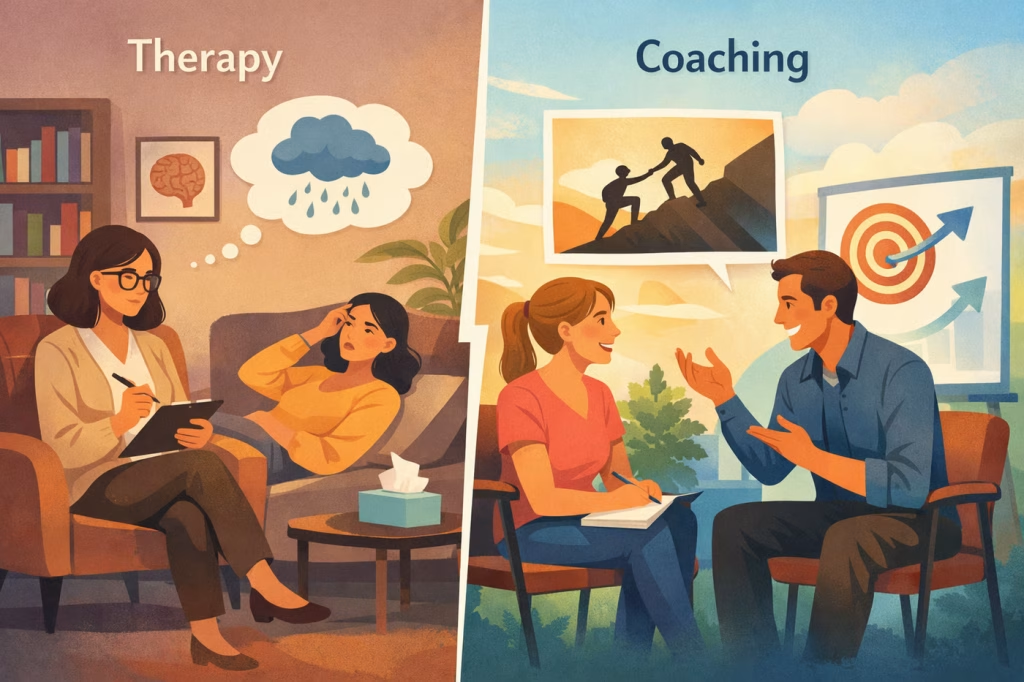
This is one of the most common questions I get when it comes to coaching. And it’s a good one.
Because therapy and coaching can look similar on the surface — you’re sitting with someone, talking about your life, your relationships, your struggles.
But the approach and outcomes are very different.
I know this not only as a coach, but as someone who spent years in therapy myself.
And therapy helped me in many ways. But it wasn’t until I discovered coaching + subconscious reprogramming work that my life actually began to change.
Let me explain.
My Experience: “I Had a PhD in My Trauma”
For most of my life, I was in therapy. And therapy did help me understand myself.
I could tell you:
• exactly where my patterns came from
• how my childhood shaped my relationship dynamics
• how my relationship with my dad influenced the men I dated
I always joke that I had a PhD in my trauma…I understood everything.
The problem?
I couldn’t change my behavior.
I kept attracting the same kinds of partners.
I would go to therapy, talk about the relationship, cry, process it, have insights… and then go out and repeat the same pattern again.
Therapy helped me understand my patterns, but it didn’t help me break them.
That changed when I discovered coaching — specifically subconscious reprogramming and Neuro-Linguistic Programming (NLP).
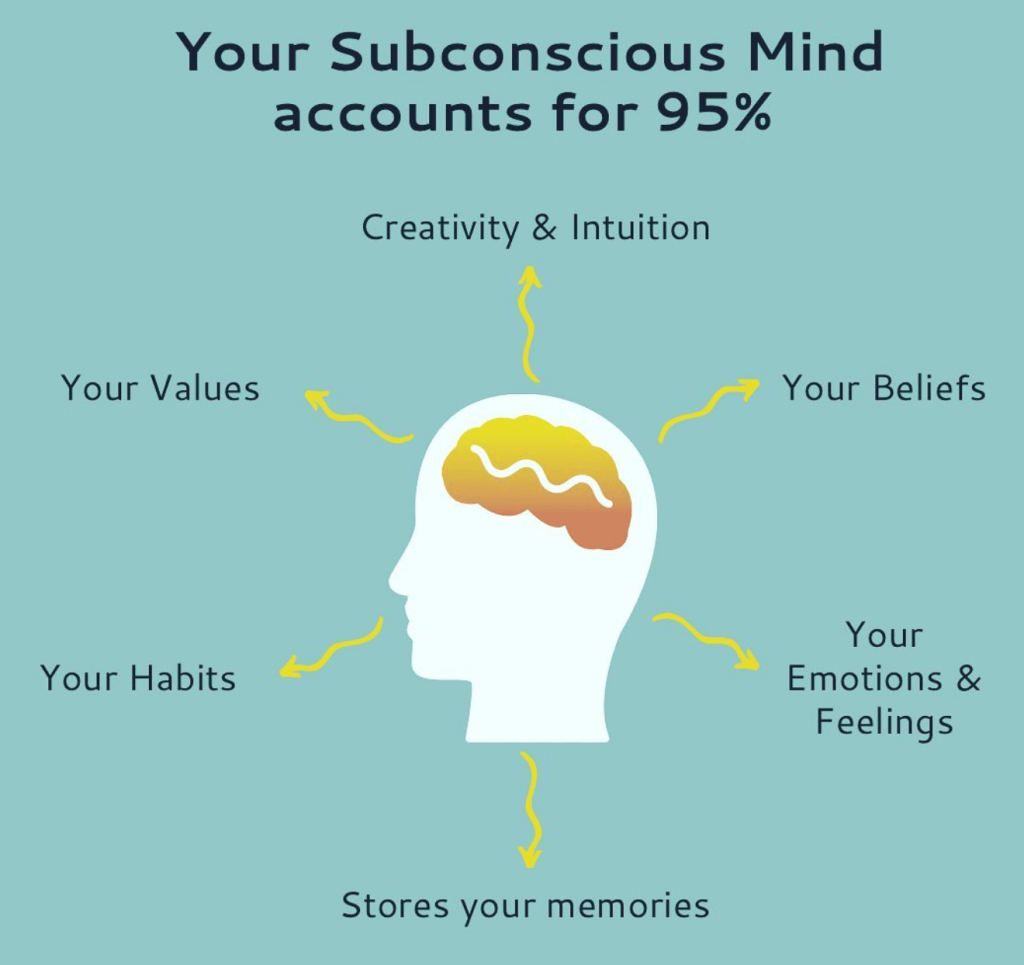
Instead of analyzing the past over and over again, we started working at the level where the patterns were actually being created: the subconscious mind.
Once I started identifying and releasing the beliefs underneath my patterns, everything shifted.
My behavior changed and I started to attract a different caliber man. – Finally my outcomes were changing!
The Core Difference Between Therapy and Coaching
In my experience, the biggest difference is this:
Therapy is primarily rooted in the past.
Coaching is focused on the present and the future.
What Therapy Focuses On:
Therapy often explores:
• childhood experiences
• emotional wounds
• the origins of your patterns
• processing difficult memories
And that work can absolutely be valuable.
What Coaching Focuses On:
I can’t speak for all coaches, but the coaching I practice focuses on something different.
We ask:
• What patterns are happening right now (and we help you identify the root cause)
• What subconscious beliefs are driving them?
• Who do you need to become to create a different outcome?
Instead of rehashing the past repeatedly, we focus on changing the internal programming that is creating the pattern in the first place.
Because your:
focus → shapes your attitude
attitude → shapes your behavior
behavior → shapes your results
When we shift the beliefs underneath everything, the results start changing naturally.
A Real Example From My Coaching Practice
One of my clients came to me in her early 40s. She had spent years in therapy and was incredibly self-aware, but she had never attracted a long-term partner.
When we started working together, she told me she didn’t really want to get married. However, when we explored that deeper, we realized something important.
She didn’t actually dislike marriage. – She had a very specific belief about what marriage meant.
To her, marriage felt like:
• a prison
• restrictive
• limiting
• a loss of freedom
Those beliefs weren’t conscious.
They came from her upbringing and generational patterns around relationships. So we worked on identifying and releasing those beliefs at the subconscious level.
Then we redefined what marriage could look like for her.
Instead of seeing it as restrictive, she began to imagine marriage as:
• freedom
• partnership
• a power-couple dynamic
• building something meaningful together
During our three-month coaching container, she met someone completely different from the men she had dated before.
They’re now married and have been together for years.
She often says the shift happened because we addressed the root beliefs that therapy had never reached.
A Common Misconception About Coaching
A lot of people assume life coaching is just:
• setting goals
• managing your schedule
• building better habits
And while some coaches do work that way, that’s not what I do.
The work I do is identity-level transformation. – It’s deep subconscious work.
In our sessions, we aren’t rearranging your calendar or discussing your habits.
We’re uncovering the beliefs, patterns, and internal narratives that are shaping your life.
Then we release and reprogram them.
Because the truth is:
If your identity doesn’t change, your results rarely do.
When Therapy Is the Better Choice
Therapy can be incredibly helpful for people who need space to:
• process trauma
• explore their emotional history
• work through difficult experiences
• be witnessed and supported
For many people, therapy provides a safe place to unpack things that have never been spoken before.
And that work can be very important.
Sometimes people benefit from both therapy and coaching simultaneously.
Therapy offers a place to process and be supported. While Coaching focuses on creating forward movement and transformation.
When Coaching Is the Right Next Step
Coaching tends to be the right fit when someone reaches a point where they’re ready to say:
“I’m done repeating this pattern.”
They’re ready to:
• take radical self-responsibility
• identify the subconscious beliefs driving their behavior
• break cycles in relationships
• become the version of themselves who naturally creates different outcomes
I often work with intelligent, ambitious women who are doing well in their careers but feel stuck in their relationships.
They’ve tried:
• journaling
• therapy
• reading every self-help book
But the patterns keep repeating.
Coaching is where we finally change the internal programming creating those patterns.
One Final Difference
In therapy, you may be able to vent and process for long periods of time.
And that has value.
In coaching, I will listen and hold space — but I will also interrupt the pattern when I see it happening. Because you’re not paying me to talk about the same problem for years.
You’re paying me to help you change it.
The Bottom Line
Therapy helps you understand your past.
Coaching helps you create a different future.
Both have their place.
But if you’ve reached a point where you’re ready to stop analyzing the pattern and finally break it, coaching might be the next step.
If you’re ready to move beyond understanding your patterns and actually change them, book a connection call with me here to explore your options and see if it’s a good fit.